Replying to myself, I forgot lubuntu has switched from ubiquity to calamares. Looking at the code around the bootloader, it doesn't seem to support armhf/arm64 at the moment. Nice little project for somebody to add it.
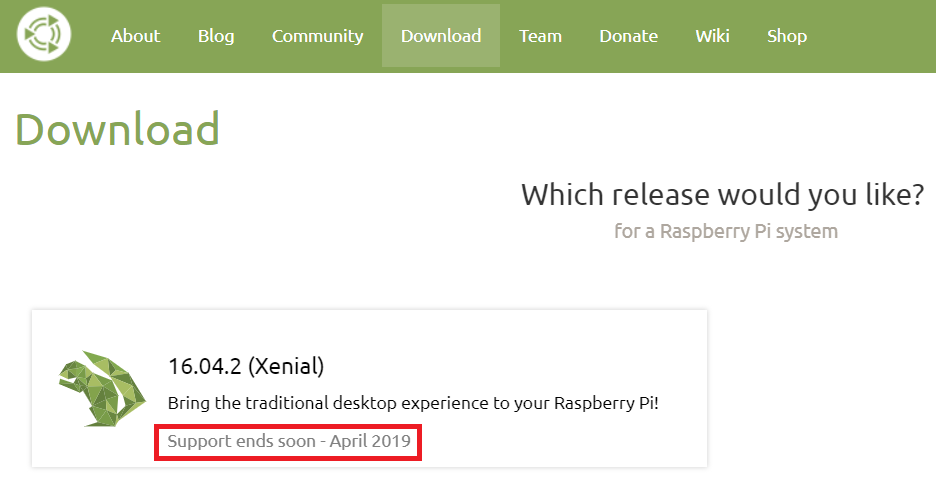
@wdim Ubuntu MATE 16.04 will continue receiving security patches from mainline Ubuntu after April 2019, it's only the Ubuntu MATE packages that won't get security updates after April. I doubt these packages ever got updates anyway.
Do you have a timeline on when we can see the beta images? My school district is getting ready to host a CyberCamp with every student getting a Pi 3 B+. The whole camp will be on and using the Pi. I've been testing OS's and would like to give UbuntuMate a spin.
Count me in as far as betas. I've got a low-priority project that ideally would use an ubuntu-based image because, TBH, I'm not a huge fan of Raspbian after my first experience with it. Similarly, if the beta image has issues I don't care because this project is low priority - I'm already planning at least one nuke-and-repave.
@stillwinter I actually encountered this just a few days ago. I had never heard of it before. My reaction..... OH H3!! NO! That is not going to happen. I don't care who they think they are. Everyone should protest to this. It is unfortunate that I will have take Ubuntu off my other computers.
Ubuntu-core is not for regular users. Although in all honesty I have no clue who it is designed for. In my opinion there is a complete failure in explaining how to use these images (sorry Martin more negative stuff).
Ubuntu server only requires a network connection on first boot. After that you don't need one. If for some reason you really object to the cloud-image packages then install via the mini iso like I've already mentioned.
Ubuntu Core is a stripped down, very minimal version of Ubuntu for boards like the Raspberry Pi and the Dragonboard 410c. You can install the classic snap which will give you a chroot environment, but a desktop environment is completely out of the question. Useful for IoT applications and for server purposes (when the classic snap is installed).
Ubuntu Server is a version of Ubuntu that is designed to be used as a server (hence the name) although a desktop environment can be installed. Just don't try installing GNOME 3 or Unity since the Pi will struggle to run those desktop environments. Useful for a server and as a desktop setup. I use Ubuntu Server 18.04 (ARM64) with the xubuntu-desktop as my main Raspberry Pi operating system.
What I meant was, say I wanted to build an internet radio using a pi for myself does core deliver worthwhile advantages over normal ubuntu? I think I would stick with normal ubuntu for ease of use.
On the other hand, if I was an internet radio manufacturer, surely I would build my own images rather than using the standard core images.
I get the idea behind snaps and core, I just don't get who the images are aimed at. Apart from testing snaps (limited number of users for this) I don't get the point. Maybe Ubuntu have come to the same conclusion, which is why they are producing 'normal' server images for the pi family now.
So after a lengthy topic and long wait, if anyone watching this topic haven't heard -- 18.04 for the Raspberry Pi is on its way - and beta 1 is available: