The future of Ubuntu MATE?

The issue boils down to recognition of, and early awareness thereof, that there is a need to "pass on the baton", then work thru a "succession planning" process. I think the current state of affairs is that "things creep up on people", with the resulting neglect of a Developer's favoured child. :frowning:

QUESTION: Is there such a thing as a documented guide for "succession planning" within the FOSS Community in general?

1 Like

Please don't misunderstand me. I was not saying you shouldn't be asking questions. That is our right and obligation as members of the Community.

What I don't like seeing is the repeated questionning of the viability of the Distro, in whatever fashion, as a new topic, over and over again! It serves no purpose!

When someone has already raised the questions, and one needs clarification or have additional points related to the same topic, to me, it seems best to keep it all under the one existing discussion, all under that one umbrella, making it a "wholistic" view of the issues discussed.

You could also try for the personal touch, but trying to send a personal message to what appear to be the more Senior Members of the UM Development Team, namely

Last but not least, "poke" directly at UM's actual Development site on GitHub, which is what I did recently, because that site would likely have triggers to actively send notifications to the Developpers for any Project-related activity.

I hope that clears up the misunderstanding.

2 Likes

(Up front caveat: Much of the info below was obtained from Proton's lumo AI.)

I wondered the same thing, and started a chat with lumo about it. Lumo generated a table of the differences between Ubuntu MATE and standard Ubuntu with Gnome removed and the MATE desktop installed. The differences are (IMO) minor:

  • Since the Ubuntu MATE Welcome and Software Boutique apps have been retired, they no longer constitute a difference.
  • UM ships with some themes that are not installed by Ubuntu's ubuntu-mate-desktop meta package. But these themes are in the repositories and can be installed as a separate step.
  • UM installs some icons, wallpaper set, lock‑screen background, splash screen, and greeter theme (customized LightDM). Some of these are customized with UM's trademark roundel and other artwork. But lightdm is available in the Ubuntu repository, as are icon and wallpaper themes.
  • UM installs xorg. But xorg is still in the Ubuntu repository and can/must be installed separately.
  • There are also a few precautions that must be taken when installing MATE on top of standard Ubuntu so that the Software Updater won't barf on things when it's time to upgrade to a 28.04 release.

As far as I can see, there isn't a lot of Ubuntu MATE-specific maintenance that was needed for the UM 24.04 release. The MATE devs maintain the MATE desktop, and the Ubuntu devs maintain the non-desktop packages in the Ubuntu repository. The retirement of the Welcome and Software Boutique apps probably happened because the UM devs didn't have the time to devote to it. I suspect their biggest headache is the paperwork in getting things packaged and released under Canonical's loving tutelage.

That said, a 26.04 release of UM may involve significantly more UM dev effort if that is the point at which MATE 1.28 is merged into the release.

Anyway, I learned enough going down that AI rabbit hole to be confident that even if UM releases cease, I will still be running a MATE desktop on Ubuntu. The downside is that it's not an endeavor I would recommend to newbies.

4 Likes

Anybody out there know of any Organization that has chosen UbuntuMATE as their preferred Desktop environment?

If so, please share here, and we can see if the "troops" can be rallied to approach them to act as an umbrella sponsor to help keep UM alive.

1 Like

Fully understood, and maybe this was my mistake when I started the thread a few months ago. I just wanted to express my concern over one Ubuntu MATE “special” thing after another disappearing.

Good to know, thanks. I can speak for myself personally but I don’t see these things affecting me greatly for the following reasons:

  • Though I prefer Software Boutique and Ubuntu MATE Welcome, I can use Synaptic (or the terminal) to manage software.
  • Themes – as long as I can still install Ambiant MATE from @lah7 ‘s PPA, I am a happy chap. I don’t prefer nor need Yaru.
  • Icons, wallpapers, boot screen, etc. – Not important. I prefer Ambiant MATE icons, the Ubuntu MATE wallpaper set from 15.04/15.10/16.04 era, splash screen is indifferent (I am happy with just seeing systemd do its thing).
  • I’ll backup my stuff before upgrading from 26.04 to 28.04 (or potentially clean installing 28.04). This should be done anyways in my opinion.

Of course, the challenge is for new users or inexperienced users in this case as there are definitely those who will not be comfortable installing their system this way (as previously mentioned in this thread). However, I have done this several times (installing Ubuntu Server then a desktop after) so it’s ok.

I know this is a lot of stating my opinion but I hope it serves as inspiration for others in case this is the best-case route to go on.

I’m also prepared to do this for my system running Ubuntu Unity, but I won’t discuss that here as it is off-topic.

Jaymo

3 Likes

I feel the Team page accurately reflects the current situation: Ubuntu MATE doesn’t have a formal team anymore, and much of its survival depends on indirect contributions from MATE (upstream), Debian (to package MATE for Ubuntu), Canonical (supporting flavours), and the wider community (testing, bugs, everything else that makes the system work)

Back when I was contributing 5+ years ago, there was more a "team" presence (with quality assurance, ISO testing, bugs reported & fixed, closer collaboration with MATE upstream) but even then, I think we had bottlenecks in communication with our project leader.

What's left today is the :ubuntu: Ubuntu base + :mate: MATE + :ubuntu_mate: Ubuntu MATE specific configuration & themes.

Just to clarify, @vkareh works with MATE upstream, not Ubuntu MATE (but he did hang around with us back then!). See his recent posts here and here.

8 Likes

On the community side, I still maintain regular backups, update it and can access infrastructure if anything unexpected happens (for example, if Bytemark ever stops sponsoring our hosting) - that's mainly what I stick around for. I think the community is one of Ubuntu MATE's strengths.

Since MATE is a desktop environment and Ubuntu MATE is just one implementation of it, there's always the possibility for the community to build a new home under fresh leadership and a different distro base - if someone is willing to take on that challenge. (Though, that might add to the old problem of "yet another distro" but niches aren't that bad)

7 Likes

BTW, speaking of Software Boutique...

There is a flatpak called Bazaar that is the equivalent for flatpaks of Ubuntu's Software Store for snaps. I am agnostic on the pros/cons of flatpak vs. snap, but Bazaar has a very slick (IMO) interface and finally provides a GUI way to manage flatpaks for newbies and the command-line-averse. It has four tabs:

  • Flathub: Allows you to browse through all of the apps available on the flathub store, by category (Productivity, Audio & Video, etc.), or by Trending, Popular, New, and Updated.
  • Installed: Shows you a list of all of the flatpaks installed on your system. You can select an app and click the trash can to remove it, or click the arrow to get more information about it.
  • Search: Type something in the search bar or select a category first and then search that category.
  • Curated: This is the really interesting one. Clicking this tab shows a message, "There is no curation information provided on this system." I believe this tab can be configured to show a curated set of apps that work well on a particular distro, although the details on how to do that are somewhat obscure as yet. This would be much like the UM Software Boutique, but for flatpaks only.

Bazaar finally provides a comfortable GUI way to manage flatpaks on your system, with one exception: It doesn't help you to clean up the residue packages left over after a flatpak has been removed. For that, you'd have to either revert to the command line, or....

Use Flatsweep, a flatpak that you can install from Bazaar. Very simple GUI interface.

I've been using both of these for about a month, and no problems yet.

Just saying.

3 Likes

That’s good to know. I’ve never used Bazaar but heard lots about it, both positive and negative. I think the logistics of using something like Bazaar would be good to replicate the functionality of the Software Boutique.

However, unless I’m mistaken, it is a requirement of Ubuntu flavours to not ship flatpak.

It’s still a great idea though, and I’m sure it can be curated or at least a start of something.

Please keep this topic focused to Ubuntu MATE and please avoid any potential political discussions.

I have removed some posts from this discussion.

7 Likes

FYI ... I "poked" the MATE Desktop Development Team's project page, asking them to share their insights direction.

I was not aware that Mr. Wimpress was the actual Lead on the MATE project itself. I thought he was only Lead for the UbuntuMATE itself.

1 Like

I recall long ago on Ubuntu UK Podcast discussions with Martin in the days before Ubuntu-MATE where he was a TU or MATE uploader/maintainer for Arch Linux (eg. MATE 1.6 packages for Arch Linux | MATE). That (or one of those interviews, Alan Pope being the Ubuntu Podcast interviewer) actually [helped] lead to the Ubuntu MATE remix that became Ubuntu MATE of today.

Key though is Martin has been associated with the MATE desktop for longer than Ubuntu MATE existed. A lot of the Ubuntu connection related to his need for a distro for his parents (being easy to support) if I recall correctly (it's been years since I listened to any of those old Ubuntu UK Podcasts)

4 Likes

Many come many go, here’s the list of the current team members and contributors but i’m not sure if that list is up to date.

Looking at the Github page, there’s not too much activity going on regarding the MATE desktop development.

MATE Desktop · GitHub and https://git.mate-desktop.org/

I remember from a while ago someone told me that the MATE desktop team is also lacking developers/contributors and they seem to struggle to get the desktop to Wayland.

It’s the same story all over again as with every open source project: lack of developers and contributors.

Not related to UM or MATE but look at libxml2 which is now unmaintained because it’s maintainer stepped down.

5 Likes

Hi guys, let me ask you a few questions. I’ve been reading this whole thread several times in the last few weeks and maybe I’m missing something and I’m not the brightest bulb in the room, so I’ll just ask:

I’m on 24.04.3. Is there going to be a 26.04, even if it’s not an LTS?

Is it up to the project leader to build a release, or, let’s say, if Ubuntu releases 26.04 the flavors get the upgrade to 26.04?

And if not, what should we expect?

I’m just trying to understand how the whole thing works, that’s all.

Thank you in advance.

2 Likes

I assume you've also read the other thread too, ie. No LTS Release for Ubuntu MATE 26.04

The wording I used (to describe where we are based on current official Ubuntu Technical Board posts) in the Ubuntu Weekly Newsletter is

LTS qualifications for Resolute Raccoon

Robie Basak reports the Ubuntu Technical Board have agreed that Ubuntu Budgie, Ubuntu Kylin, Xubuntu, Lubuntu, Edubuntu, Ubuntu Studio, and Ubuntu Cinnamon have been approved for LTS status for the Ubuntu 26.04 release. The remaining flavors are still subject to approval on request and will be non-LTS.

LTS qualifications for Resolute Raccoon

ie. CURRENTLY we know what official flavors have applied for, and been granted LONG TERM SUPPORT status for the Ubuntu 26.04 LTS release.

According to the last know 'official' update from the Ubuntu Technical Board (that I'm aware of anyway), Ubuntu MATE hadn't applied (and isn't the only flavor in this state) and thus may still be given permission for a 26.04 release. If a 26.04 release is approved we're to expect a standard 9 month release is all we currently know.

At least one flavor has had an official ISO release (these can be downloaded at https://cdimage.ubuntu.com/ and are built on Ubuntu infrastructure), plus also had respins they've hosted themselves; so there is ~little preventing any team from producing their own respin ISO, but official ISOs have a strict & documented procedures which the Ubuntu MATE team hasn't completed [yet].

Ubuntu MATE has been struggling with lack of contributors for awhile now, though they're not the only Ubuntu flavor team in that situation, but the lack of LTS application is likely a side effect of that lack of resources.

The Ubuntu MATE team were late with a Ubuntu 25.10 milestone, but did get late/belated approval there, which was a necessary requirement to be involved in the 25.10 & 26.04 release, so we know of some intent expressed a few months ago, but everyone has draws on their [limited] time.

Currently we don't know what exactly will happen... We'll have to wait and see, though anyone who'd like to step in and contribute may help get Ubuntu MATE closer to official release would be welcome.

5 Likes

Yes, I’ve read that other thread and others about this issue.

Thank you very much for your detailed reply. I’ve been an Ubuntu user for 17 years, mostly on Ubuntu and Xubuntu but also on Ubuntu MATE in the last few years, but always as a passive user, never getting involved into it and never getting to know how it works and how is it done.

Right now I’m on two old computers, Xubuntu on one and Ubuntu MATE on the other which is dying so I will have to keep only one computer, I’d love to stay on Ubuntu MATE, but the future of this flavor is now more uncertain than ever before. So I don’t know if I should stay on Ubuntu MATE and keep going forward, or just forget about it.

5 Likes

I’ve been running a Mutiny workflow setup since at least 18.04 LTS. There are certain things due to muscle memory, keyboard shortcuts and professional commitments I simply cannot go without in my DE.

However, with the continual perversion of GTK3/4 and a wild mix of snap, flatpak, appimage and deb (the latter sometimes feeling like a 2nd class citizen of installation packaging these days even on a Gnome2 centered DE) I too have had some reservations about continuing with Ubuntu Mate. This news, or lack there of, is troubling.

One of my must haves is a global menu for use with 3 screens. Vala has been EXTREMELY buggy since at least 22.04 (and the poorly suggested replacements of Mate-dock) is about to trigger the final call for me personally. Global menu crashes multiple times within a 3 minute period are just not acceptable anymore. The panels/applets/DE always recover but its annoying to the point of pain while working.

This is not a rant; Ubuntu Mate is still installed on every machine in my house (and there are many) but I’ve taken this deadline miss to explore the closest thing based on Kubuntu 24.04. Why Kubuntu? Because I’m already using several of their software stacks within Mate.

I was able to, after a few days of casual tinkering, able to completely replicate the Mutiny DE that I had with Ubuntu Mate, on one cattle laptop. To most utter surprise it actually runs better than it did with Ubuntu Mate, faster boot up, competitive start and app loading…but without the errors/crashes/better theming/etc. Overall, so far, it does feel like Ubuntu Mate but without the duct-tape, band-aids, shims, disparaged range of install types and crashes.

If anyone is interested in a full documentation set-up of Mutiny (Kutiny?) with Kubuntu 24.04 please let me know and I can post one in another appropriate thread and on my website.

I will likely run Ubuntu Mate 24.04 LTS with ESM/Ubuntu Pro until the end (2030ish?) because not doing so would be catastrophic for my current programming projects (lots of integration tooling). But my concerns requiring an uber efficient DE is less of a concern these days because of the gradual build-up of more powerful hardware since circa 2014.

I hope to hear some good news from the Ubuntu Mate team. There’s no reason just to stonewall everyone here who is, a bit concerned moving forward.

Let me end by saying thank you to all those who have contributed over the years, even the silent majority who love this DE day and day out (I am and still am). Every day I sit down and think, I really love working with it (aging stacks showing as they are).

Hope for the best, while preparing for the worst, but do so with gratitude for those who built without demands and shared freely.

8 Likes

Let me start of by saying I dearly want UbuntuMATE to continue in its current incarnation.

But ... we need to ensure we have a migration path (and process) for the (MATE-oriented) Community as a whole, to ensure that the knowledge base and relationships developped within the UbuntuMATE Community does not dissipate or trickle away until there is nothing left work holding onto, that there is continuity for everyone.

To that end ...

Jaymo, if the Community members all agreed that both

  • Ubuntu Server, and
  • Ubuntu Desktop

would be adopted as "twin" bases, both recognized and supported as acceptable "in-scope" platforms to complement an installed "MATE Desktop" (maybe for specified releases), could that be the alternative path that the Community would accept as a valid model for Personal/Individual "business continuity", thereby enabling the continued maintenance of this Community, using this contact channel, under the "mutated" structure?

If such were the case, would any members at large be willing to "flesh out" the migration path for each of those two scenarios, in order to make the transition as painless as possible.

Is there any reason why either of those two "flavours" would be less desirable or present greater exposure to instability than the other?

What say you all?

2 Likes

To be fair, if Ubuntu MATE was to cease existing as an official flavour, nothing stops someone from building an "Ubuntu MATE Remix" spin (like the 14.10 and 14.04 times). :cd: :dvd: Not sure if (or where) the script to building those ISOs are.
If that happens, then this community could adapt into something else or have a migration path. It's our (Martin's) server, so we control the fate to this site. The only thing Canonical can control is the brand name (Ubuntu MATE) or Ubuntu trademark in the event it is no longer an official flavour.

At the moment, there is no cost to hosting this site (it's sponsored by Bytemark), but that could change if we were to become purely community based or we'd need to downsize... or check with the leader if the Patreon money can cover the costs.

You see, if it was me leading a new distro 'remix', I would pick Arch Linux as the base. It's really easy to build custom ISOs. I also maintain a gtk3-classic package which brings back older GTK behaviours (which is a pain to package for Ubuntu). Plus, if we were snap adverse, then it wouldn't include them - native packages all the way (Octopi instead of Synaptic)!

4 Likes

Thank you, Luke, for those additional insights and thoughts.

When I put forward my thoughts earlier, I was deliberately trying to stay away from the idea of creating a "remix", for the reason that, being new, it wouldn't draw the "trustworthiness" of an existing "flavor", thereby encouraging members of the UbuntuMATE Community to migrate to other non-MATE environments.

Also, by making my proposal MATE-centric, but "distro" agnostic, I thought it might relieve the Development Team from devoting efforts on a distro build, and re-directing those efforts to enhancing/expanding the capabilities within a MATE Desktop, the assumption being that the underlying OS continues to support the required GTK3 libraries.

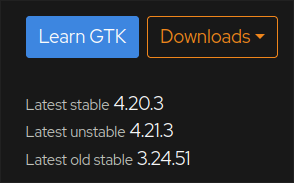
To that end, the only question is whether GTK3 itself is at risk of being orphaned by the GTK development team, when that Team chooses to release a future GTK5 ecosystem. The referencing, on their site, to each of the versions 3 or 4, already raises concerns for me, by the simple fact that they don't mention version 2 at all!

That deprecation may have resulted from version 2 being so poor that you can't find anyone still using it in active development.

But ... you have to wonder at which point version 3 may begin to fall in Developer esteem, simply as victim to evolving perceptions that an eventual GTK5 is "so" superior, that GTK3 is no longer deserving of the GTK organization's resources to maintain access to, or close the gap on "oversights" in that version's codebase.       IF   that was the unstated assumption in your suggestion to look at an Arch-based remix, then I now understand the motivation to put that forward.     Otherwise, IMHO, that step might be one that could scare away the existing Community base, unless they were kept fully informed as to the why that option was being pursued.

Let's not forget that, regarding applications, how likely that they would maintain ongoing "parallel" or "synchronized" development of their code for both the GTK3 and GTK4 code base?

Maybe a bit off-topic, but

  • should the public infer any special meaning from the fact that 5 of the 7-member Core Team for GTK are Red Had employees?

Notwithstanding that, Luke, are you saying that you are actually considering to undertake an Arch-base respin?

2 Likes